As digital assets become an essential part of modern finance, securing access to cryptocurrency wallets has never been more important. Unlike traditional financial systems, cryptocurrencies operate without centralized control. This means users are fully responsible for protecting their funds. Trezor login was created to address this challenge by offering a secure, hardware-based method for accessing and managing crypto assets.
This guide provides a detailed overview of Trezor login, explaining how it works, how users access their wallets, how Trezor Suite fits into the process, common login-related issues, and best practices for maintaining long-term crypto security.
Trezor is one of the earliest and most trusted hardware wallet brands in the cryptocurrency industry. Developed by SatoshiLabs, Trezor devices are designed to store private keys offline, preventing exposure to online threats.
Unlike software wallets or exchange accounts, Trezor hardware wallets ensure that sensitive cryptographic information never leaves the device. This significantly reduces the risk of hacking, phishing, malware, and unauthorized access.
Popular Trezor models include:
Both models follow the same core security principles while offering different hardware features.
Trezor login does not follow the traditional concept of logging into an online account. There are:
Instead, Trezor login is based on physical verification and device ownership.
Logging in to Trezor simply means connecting the hardware wallet, unlocking it securely, and approving actions directly on the device. Without the physical device, access is impossible.
Password-based systems are common targets for cybercriminals. They can be compromised through phishing emails, fake websites, malware, or data breaches. Trezor removes this risk by eliminating passwords altogether.
Trezor login relies on:
This design ensures that private keys remain isolated, even if the connected computer or browser is compromised.
The Trezor login process is designed to be simple while maintaining high security standards.
The user connects the Trezor wallet to a computer or mobile device using a USB cable.
Trezor Suite detects the connected device and begins the authentication process.
Depending on the setup, users may need to:
Every sensitive operation—such as sending funds or connecting to applications—must be confirmed on the Trezor device itself.
This ensures that no action can occur without physical user approval.
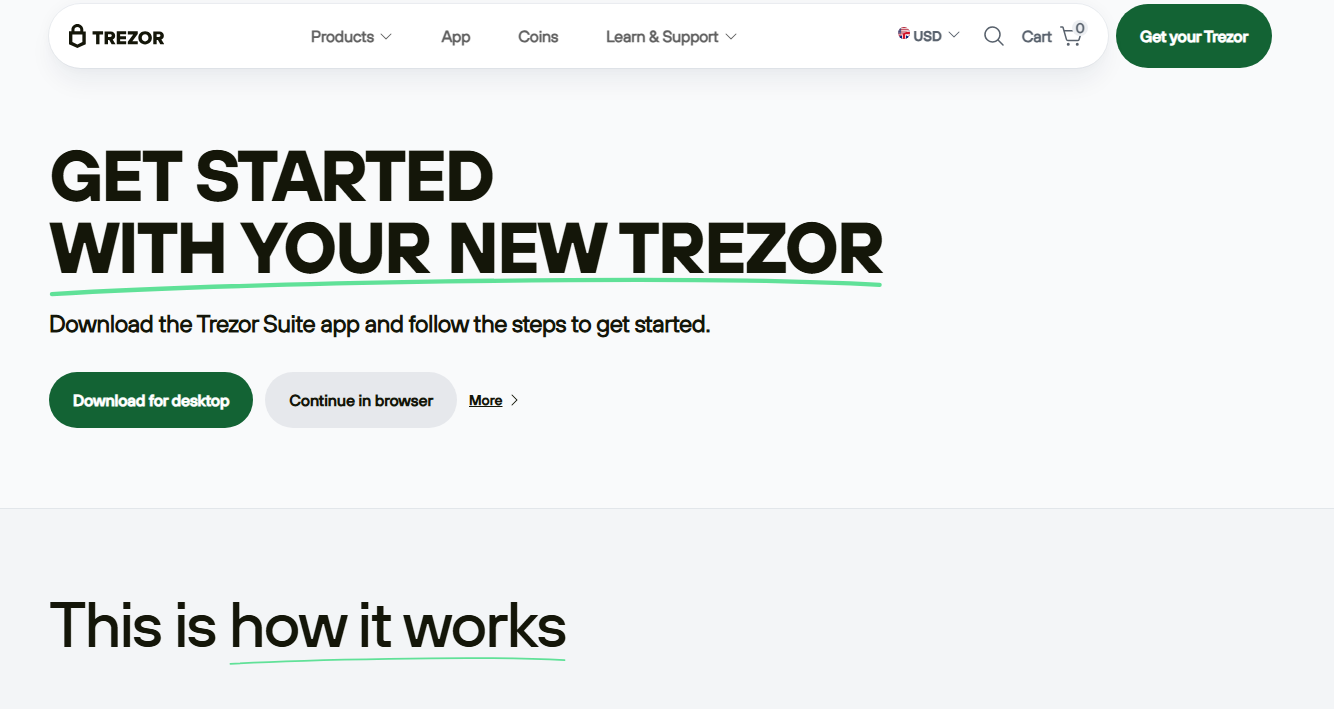
Trezor Suite is the official software interface for managing Trezor wallets. It is available as:
However, Trezor Suite does not function as an account-based platform.
Key points:
Trezor Suite simply communicates with the hardware wallet, which handles all authentication and security.
Before using Trezor login, users must complete the initial device setup.
Users can create a new wallet or recover an existing one using a recovery seed.
A PIN code is created to protect the device from unauthorized physical access.
Trezor generates a 12- or 24-word recovery seed, which acts as the master backup for the wallet.
Users must verify the recovery seed directly on the device to ensure accuracy.
Once setup is complete, future logins require only the device and PIN.
Both options rely entirely on the hardware wallet for security.
After successful Trezor login, users can:
Trezor supports a wide range of cryptocurrencies, though support may vary by model and firmware.
Trezor supports hundreds of cryptocurrencies and tokens, including:
Additional assets can be accessed using compatible third-party wallets.
This may occur due to outdated software or connection issues.
Solution:
Update Trezor Suite, try a different USB port, and restart the device.
Entering the wrong PIN multiple times increases the delay between attempts.
Solution:
Wait for the delay to pass or reset the device and recover using the recovery seed.
PINs cannot be recovered.
Solution:
Reset the device and restore the wallet using the recovery seed.
Some browsers may block device communication.
Solution:
Use the Trezor Suite desktop application.
The recovery seed is the most critical component of Trezor login security. It allows users to recover their wallet on a new device if the original is lost, stolen, or damaged.
Important rules:
Anyone with access to the recovery seed can fully control the wallet.
FeatureTrezor LoginExchange LoginPrivate key ownershipUser-controlledPlatform-controlledLogin methodHardware verificationEmail & passwordHack exposureVery lowHighAsset custodySelf-custodyThird-party
Trezor login gives users full ownership of their assets.
Trezor can be integrated with third-party wallets such as MetaMask for accessing decentralized applications.
How it works:
This enables Web3 access while keeping private keys offline.
Trezor login does not require personal information such as names or email addresses. However, blockchain transactions are publicly visible. Trezor improves security but does not provide transaction anonymity.
Users are fully responsible for safeguarding their recovery seed and device.
These limitations are intentional trade-offs for higher security.
To maintain maximum security:
As cryptocurrency adoption continues to grow, self-custody solutions like Trezor are becoming increasingly important. Hardware-based login systems offer a reliable alternative to centralized platforms and help users maintain full control over their digital wealth.
Trezor continues to expand its ecosystem while maintaining a strong focus on transparency and security.
Trezor login provides a secure, hardware-based method for accessing and managing cryptocurrency. By removing passwords, isolating private keys offline, and requiring physical confirmation for every action, Trezor significantly reduces the risks associated with digital asset storage.
For users who value independence, transparency, and long-term protection of their crypto holdings, Trezor login remains one of the most trusted and effective self-custody solutions available today.